Best Personalized Books for a New Baby: What to Look For Before You Buy
A buyer's roundup framed around what matters in a personalized book for a baby: illustration quality, personalization depth, safety, and whether you can approve it first.
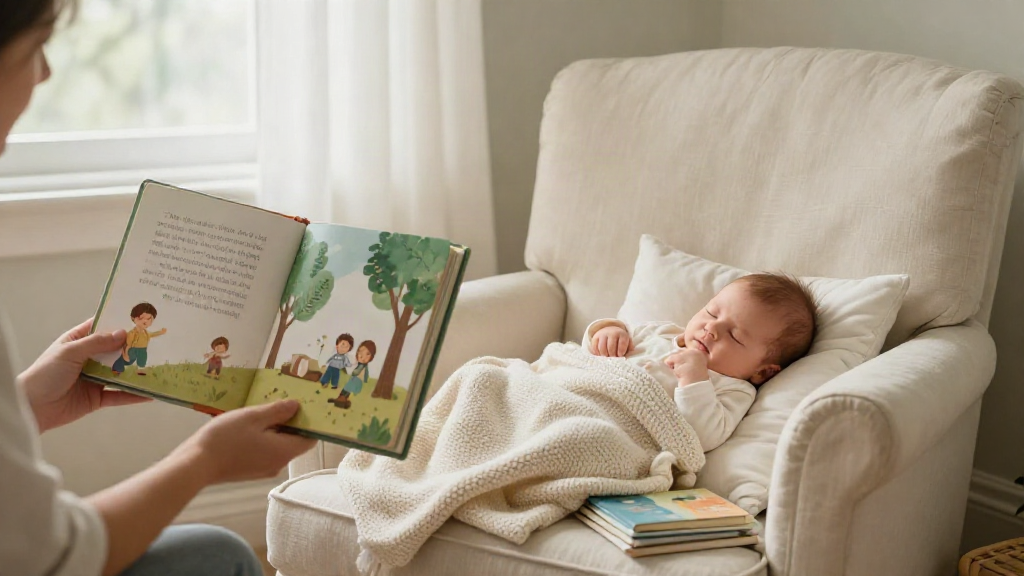
A new baby arrives, and somewhere in the quiet between the first hello and the first night home, you start looking for something to give. Not another plastic toy that will be outgrown by spring. Something that says: you were expected. You were wanted. Here is the story of how you came home.
Personalized books promise exactly that. But the category is wide, and the difference between a book a family keeps for thirty years and one that goes into a donation box is decided by a handful of things you can check before you buy. This is a buyer's guide to the best personalized books for a new baby - what to look for, what to be wary of, and how to choose well the first time.
What Makes a Personalized Baby Book Worth Keeping
Every personalized book gets one thing right by default: the child's name on the cover. That is the easy part, and it is also where many books stop.
A book worth keeping does something harder. It puts the child inside a story that could only belong to them - their family, their home, the small details that will mean nothing to a stranger and everything to them at four years old.
So when you compare options, do not ask "does it have their name?" Ask "does it have their life?"
The Five Things to Check Before You Buy
1. Illustration quality and craft
Flip through the previews. Are the illustrations drawn for the story, or assembled from a template with a face dropped in? Look for consistent line and colour across pages, a palette that feels designed rather than defaulted, and art that rewards a second look.
Well-made illustrations matter for a practical reason too. A baby will chew, tug and turn these pages long before they can read them. A book with real craft is a book that survives that stage and becomes the one they ask for at bedtime.
2. How deep the personalization actually goes
Personalization runs on a scale. At one end, a name printed into a stock story. Further along, a character modelled on your child. At the deepest end, a book built around one real memory - an afternoon at the lake, the first snowfall, the day they came home - with the people who were there drawn into the pages beside them.
That deepest kind is the one that turns a gift into an heirloom, because the story exists nowhere else. Look for a brand that asks you for a memory, not just a name and a hair colour.
3. Safety and materials
For anything reaching a newborn's hands and mouth, check the physical build: paper weight, binding, non-toxic inks and finishes. A softcover should feel substantial in the hand, not flimsy. A hardcover should have a spine that opens flat and lies still.
If a maker does not describe their materials, ask. A brand confident in its production will answer plainly.
4. Whether you can approve the book before you pay
This is the single most useful filter in the category, and it is easy to forget in the moment.
You are buying something you cannot fully inspect - it is custom-made, and it features a child. A print-on-demand book with a misspelled name or a mismatched illustration is a problem you discover only after it arrives, once your money has already moved.
The best personalized books let you see the complete book, page by page, and approve it before payment. You read it first. You check the spelling, the hair, the little details. Only when it is right do you pay, and only then does it go to print.
Treat this as a non-negotiable. It costs you nothing and it protects you entirely.
5. Photo privacy
Many personalized book makers ask for a photograph of your child to build the illustrations. That is a reasonable request on the surface, and a permanent decision in practice: a baby cannot consent to a photograph of their face being uploaded and stored.
Ask where the photo goes, how long it is kept, and who can see it. Better still, look for makers who do not need a photo at all - those who build the child's likeness from details you describe instead. A book that requires no photograph of your child is a book with nothing to leak.
Softcover or Hardcover?
Both editions hold the same story. The choice is about where the book will live.
A softcover is the everyday copy - light, easy for small hands, comfortable in a bedtime stack. A hardcover is the archive copy, the one that goes on a shelf and comes down at Christmas when the child is ten, and again when they are twenty.
Many families order the softcover to read now and the hardcover to keep. Others start with the hardcover and never look back. There is no wrong answer, only the one that matches how you expect the book to be used.
Choosing the Memory to Build the Book Around
If you are buying for your own child, this part is easy and slightly overwhelming: you have hundreds of moments to choose from. Pick the one you already tell out loud. The one you describe to friends. That instinct is telling you where the story lives.
If you are a grandparent or a friend buying for someone else's baby, you have an advantage: you can anchor the book to a moment the parents were part of - a first snow, a first holiday, the morning everyone met the baby. Ask them for a detail or two. The book will be better for it, and so will the gift.
What to Avoid
Skip anything that reads as a novelty: books personalised by name alone, illustrations that look mass-produced, and anything with no preview and no approval step.
Be cautious of pressure language - countdowns, "only three left," next-day promises. A personalized book is a considered purchase, not a flash sale. A maker who rushes you is telling you something about how carefully they print.
And be wary of any listing that will not tell you plainly what the book is made of, how the personalization works, or what happens after you order.
A Five-Minute Checklist Before You Check Out
- Can you preview the full book, page by page, before paying?
- Does the personalization go beyond the name and into a real memory?
- Are the illustrations made for the story, with consistent craft?
- Is the paper weight, binding and ink finish described clearly?
- Can the book be made without uploading a photograph of your child?
- Does the maker explain what happens to your details after the order?
If all six are yes, you are looking at a keepsake.
A Gift That Reads Like a Letter
The best personalized book for a new baby is not the one with the most features. It is the one that lets you hand over a story only that family could tell - crafted well, built safely, made without asking for anything private, and approved by you before you pay a cent.
You remember it. Someone brings it to life. And one day, long after the plastic toys are gone, a child opens the cover and finds themselves on the first page.