How to Turn a First Memory Into a Personalized Children's Book
A gentle walkthrough of how one real family memory - a first hello, a first snowfall, a first day home - becomes a fully illustrated book with the child and their loved ones drawn into every page. Covers choosing the moment, describing the people and places, and approving the finished book before paying.
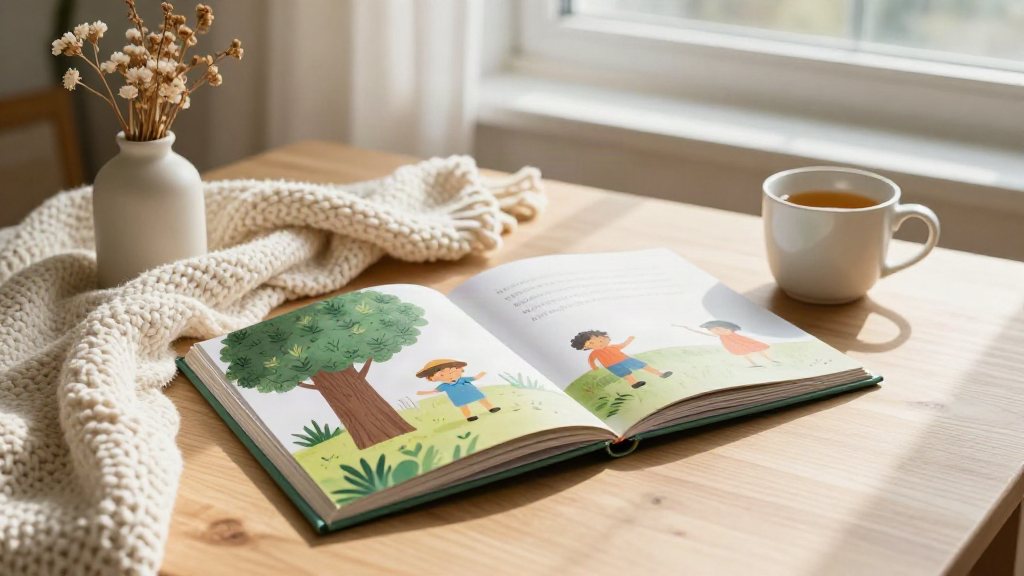
There is a moment you keep coming back to.
A first hello. A first snowfall. The first day home, when the house was quieter than it had ever been and somehow fuller than it had ever been.
You remember it. We bring it to life.
A personalized children's book takes one real memory and draws the child, the people who love them, and the world around them into a story they can hold in their hands. This guide walks through the whole process, from choosing the moment to reading the finished book before you pay a cent.
Step 1: Choose the one moment you want to keep
You do not need a whole childhood. You need one scene.
The strongest personalized children's books start from a single, specific memory: the morning the grandparents met the baby, the first time snow settled on the window, the afternoon they came home and the dog would not stop sniffing the car seat.
Ask yourself: what is the one detail you would not want to forget in ten years? That detail is almost always the right starting point. Specific beats grand. "The way she gripped your finger at 4 a.m. in the blue light of the hospital room" will always outlive "her first year."
If you are ordering as a gift, you can work from the parent's memory instead of your own. Ask them for one sentence about that day. One sentence is enough.
Step 2: Write down what you actually remember
You do not have to write well. You only have to write down.
Sit with the memory for ten minutes and note the small things: the light, the weather, the sound in the room, what someone was wearing, what was said, what everyone laughed about later. Fragments are fine. A list is fine.
This is the raw material an illustrator and writer work from. The texture is what makes a custom children's book with the child's name feel like their story rather than a template with a name dropped in. The more sensory the detail, the more the finished page feels like somewhere you have actually been.
Step 3: Name the people and places that belong in the story
Now decide who appears on the page.
A personalized children's book can include the people who were actually there: mom and dad, siblings, grandparents, a favourite aunt, the family dog. You can also anchor the story in a place: the nursery with the particular wallpaper, the garden, the street where they took that first walk.
There is no need to send a photograph of your child. Nidobook builds the illustrations from your descriptions - hair, expression, the little details that make them recognizably themselves - so the story stays personal without any photograph of a child leaving your hands.
Sort the guest list before you start drafting the book and you will save yourself a second round of edits. Who has to be on the page, who would be lovely to include, and who can be mentioned in the text instead.
Step 4: Describe the memory in your own words
This step is a conversation, not a form to fill in.
You tell the story the way you would tell it out loud, and the text is shaped into a picture-book narrative around it. Short lines. A gentle rhythm. Room for the illustrations to carry as much as the words do.
A few things worth knowing as you write:
- A keepsake children's book reads aloud better than it reads silently, so read your sentences out loud as you go.
- Keep the language at the level of the child now, not the adult they will be in twenty years.
- Let the ending land on something quiet and warm rather than a lesson.
Personalized baby memory books tend to work best when they end where the day did: everyone together, the light going soft, the story settling.
Step 5: Read the finished book before you pay
This is the part that matters most, and it is the part most custom book shops skip.
The complete personalized book is drafted and shared with you first. Every page, every illustration, every line of text. You read it the way you will read it at bedtime, and you ask for the changes you want. Nothing is printed until you approve it, and you are not charged until you are happy with what you have seen.
So there is no risk of opening a parcel to find a drawing that does not look like your family or a line that does not sound like the day you remember. You approve the book, then you pay for it.
What arrives, and what you keep
Your finished story comes as a printed hardcover or softcover edition - a real book to read, hold, and eventually hand to the child when they are old enough to read it themselves. Sizes and editions sit comfortably in the mid-range gift bracket, and every order includes a digital keepsake PDF so you have a copy that cannot be lost, spilled on, or loved into pieces.
Why this outlasts most first-year gifts
Soft toys get outgrown. Clothes get packed away. A personalized children's book keeps doing its job, because a child who is in the story will ask for it again. And the parent reading it is not just reading a book; they are handing over the version of that day they wanted to keep.
That is why it lands as a gift for a newborn, a first birthday, a first Christmas, or simply as a "I don't want to forget this" present from a grandparent who was there.
Start their story
Pick the moment. Write down what you remember. Tell it the way you would tell it out loud.
Everything after that is craft: the drawing, the printing, the quiet weight of a book with your child's name on the cover. You will have a chance to read all of it before anything is paid for or printed.
Start their story.