Personalized Children's Book With Your Child's Name
Why seeing their own name on a page holds a young child's attention longer How familiar faces, places, and family words turn a story into a daily language ritual Simple ways to read a personalized book together to build name and word recognition
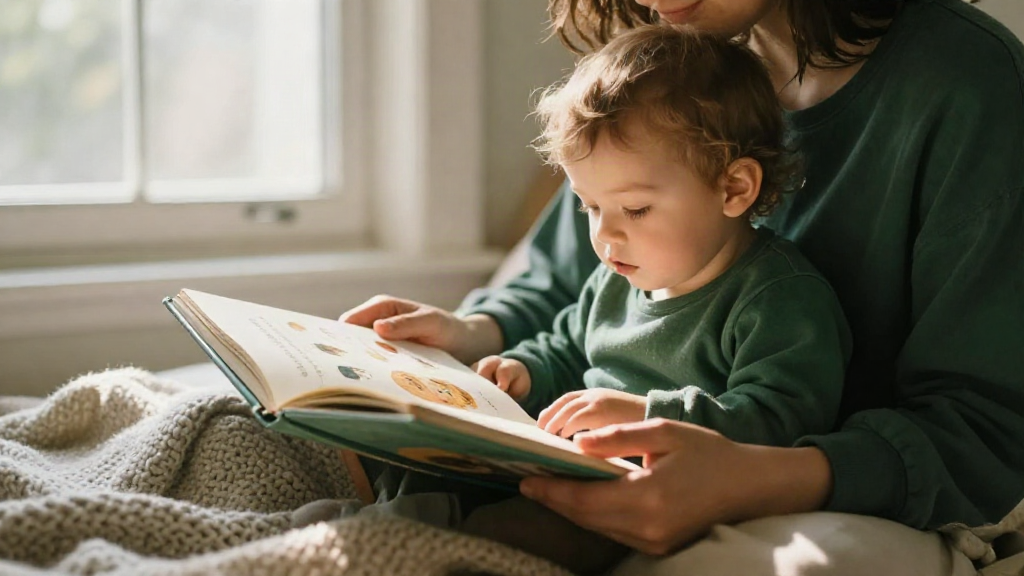
The pages of a storybook open a small, safe world. When that world already knows your child's name, something shifts. They lean in. They point. They wait for the words they have heard a hundred times at home.
A personalized children's book with your child's name does more than look lovely on a shelf. It gives a young reader a reason to look again, and again, until letters and familiar words start to belong to them.
Why Their Own Name Holds a Child's Attention Longer
Attention in early childhood is short and precious. A toddler will happily look away from a page that tells someone else's story, but a page that says their name asks a question only they can answer. That is you. It is often the first word a child recognizes in print, ahead of almost any other - not because it is easy, but because it matters.
When the name appears across the pages, the child begins to track it. They learn its shape before they learn its letters: the tall first letter, the curve in the middle, the way it ends. Over weeks of reading together, that shape becomes a landmark they can find on their own. Recognition arrives quietly, the same way it does with a favorite cereal box or the street sign near home.
This is why personalization is not decoration. It turns a page into a place where the child is already expected.
Familiar Faces, Places, and Family Words Become a Daily Language Ritual
Names are only the beginning. A personalized story can draw in the people and places that make up your child's small world - a parent, a sibling, a pet, a house, a first snowfall, a first morning home.
Each of those is a word your child is already collecting. When they appear in the story, spoken in the same warm voice they hear at bedtime, the words get rehearsed without anyone calling it practice. You say "Grandma." They point at Grandma. You say "the garden." They turn the page to find the garden again.
Read often enough and this becomes a ritual: the same opening line, the same pause for the same joke, the same last page. Ritual is what memory loves. Children hold onto words they hear in a familiar rhythm, in a familiar lap, at a familiar hour.
That is the quiet advantage of a book built around one real family memory. It is not a generic story with a name dropped in. It is your child's world, told back to them in print.
How to Read a Personalized Book Together
The book does some of the work. The way you read it does the rest. A few gentle habits help name and word recognition settle in.
1. Start with the name, every time
Before the story begins, rest your finger under your child's name and read it slowly. Let them say it with you. Do this on every read for a few weeks - repetition is the whole engine here.
2. Point as you read
Slide your finger under the words as you say them. Your child will not read yet, but they are learning that the marks on the page carry the sounds in your mouth. That link between print and speech is the foundation of everything that comes later.
3. Pause before the familiar word
When you reach a family word or a place your child knows, stop just before it and let them fill it in. Even a babbled attempt counts. The small victory of being right keeps them asking for the book again.
4. Ask, do not quiz
"Where is your name?" and "Who is this?" are invitations, not tests. Keep the tone light. If they lose interest, close the book - a short, happy read beats a long, tired one.
5. Let them hold it
A book that can be carried, dropped, and opened alone becomes theirs. Personalized pages survive sticky fingers and constant rereading far better than a novelty they only see at holidays.
6. Read at the same time of day
Bedtime, after nap, after breakfast - the hour matters less than the steadiness. A predictable slot turns the book into part of the day's shape, and children remember what has a place.
What Makes a Personalized Book Worth Choosing
Not every custom book earns its space on the shelf. When you are choosing a personalized children's book with your child's name, look for a few things:
- The name is woven into the story, not pasted on top of it.
- The child's world - family, home, one specific memory - is drawn into the illustrations.
- The language is warm and simple, made to be read aloud.
- You can see the finished book and approve it before you pay.
- No photo of your child is required, and their details stay private.
Nidobook works this way. Each book is built from one real family memory, with the child and the people around them illustrated across every page. You review the complete book in softcover or hardcover, along with a digital keepsake PDF, and approve it before payment. Nothing is printed until you are happy with it.
A Book That Keeps Working After the First Read
The first read is the easy part. The value shows up later: the night your child finds their name in the text before you say it, the afternoon they carry the book over and ask for "the one with me in it."
That is what a personalized story gives you - not a single surprise, but a page that keeps returning their name, their people, and their words, in a voice they trust. Start with one memory. Read it often. The words will follow.